The verdict
Is El Milongón worth it?
Yes. El Milongón gathers the three sounds Montevideo is proud of, tango, candombe and gaucho folklore, on one stage, with more than 30 artists, and it serves a three-course dinner with wine first. Guests rate it 4.5 out of 5 across 49 reviews. Two of the arts on the programme, candombe and tango, sit on UNESCO's list of intangible cultural heritage, so one evening covers a great deal of what makes Uruguay sound like Uruguay.
Five reasons the night works
Candombe, close up
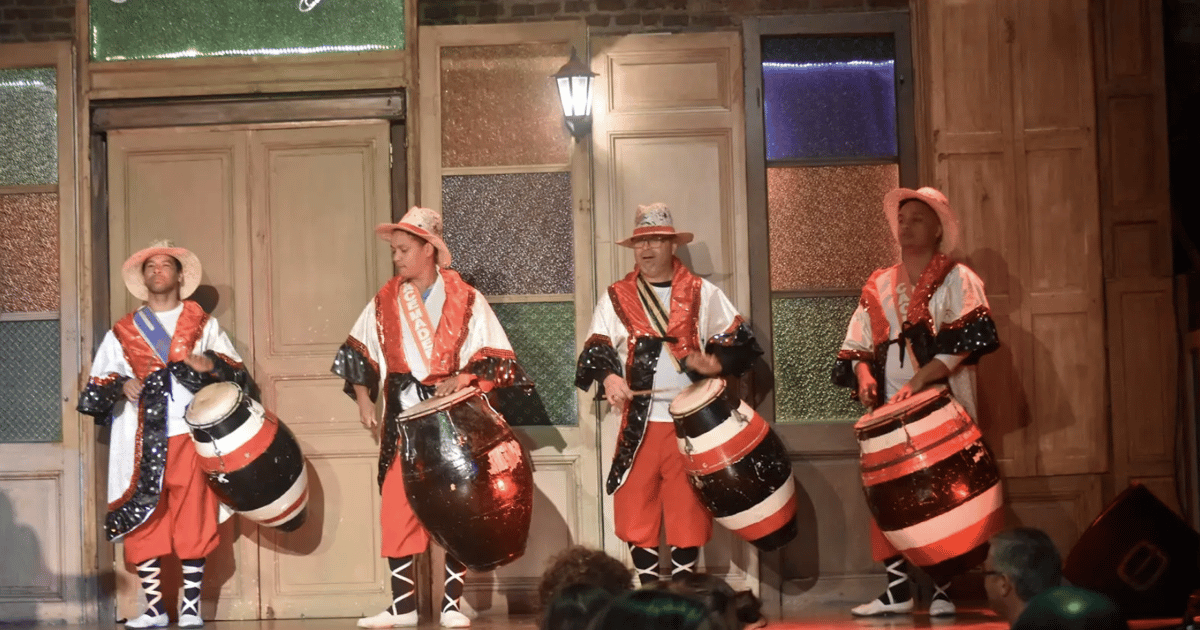
UNESCO describes candombe as drum calls that sound through the Sur, Palermo and Cordón districts of Montevideo on Sundays and holidays. Here the drummers come to you, indoors, on any evening from Monday to Saturday.
Tango with Montevideo's accent
UNESCO lists tango as a tradition of both Buenos Aires and Montevideo. La Cumparsita, among the most famous tangos ever written, is the work of a Montevideo student, Gerardo Matos Rodríguez.
Dinner is part of the ticket
The listing includes an appetizer, a main course and dessert, with wine, soft drinks and mineral water. Beer and tips are extra.
You are invited in
The listing says the audience is invited to interact with the typical characters of candombe, the figures who parade with the drums at Carnival.
Easy to change your mind
The evening comes with free cancellation and a reserve-now, pay-later option, and the listing carries a wheelchair-accessible mark.
What is on the stage
Nine things on the El Milongón stage, and where they come from
The programme is a mix of tango, candombe, folklore and milonga. Each has a history in Montevideo, and UNESCO, the Uruguayan state and the encyclopedias tell it this way.
-
Candombe
A drum tradition born in Montevideo's southern districts
In 2009 UNESCO added candombe to the Representative List on which it records humanity's intangible cultural heritage. Its entry describes drum calls that enliven the Sur, Palermo and Cordón districts of southern Montevideo, home to a population of African descent, every Sunday and on many holidays, and calls candombe an expression of resistance as well as a Uruguayan musical celebration.
-
The drums
Chico, repique and piano
Wikipedia explains that candombe rests on three barrel-shaped drums: the small, high chico, which keeps the pulse; the mid-sized repique, which improvises; and the large piano, which plays the bass part. Each is worn on a shoulder strap and played with one stick and one bare hand. UNESCO adds that the beat of the piano differs in each of the three neighbourhoods.
-
The llamadas
The calls of Barrio Sur and Palermo
A llamada is a drum call. UNESCO says the practice begins around communal fires, where players tune their drums before the march sets off. Wikipedia places the yearly Carnival parade, the Desfile de Llamadas, on Isla de Flores street, which runs through Barrio Sur and Palermo, and dates the first parade organised by the city to 1956.
-
The characters
The Old Mother, the herb doctor and the broom man
A candombe troupe, Wikipedia notes, marches with stock characters: La Mama Vieja, the Old Mother; El Gramillero, the herb doctor in top hat and frock coat; and El Escobero, who juggles and balances a broom. The listing says the audience is invited to interact with the typical characters of candombe.
-
Tango
One art, two cities
UNESCO inscribed tango in 2009 as an Argentinian and Uruguayan tradition. It grew up, the entry says, among the urban lower classes of Buenos Aires and Montevideo, in the Río de la Plata basin, where European immigrants, the descendants of African slaves and the local criollos lived side by side. Uruguay's Ministry of Tourism calls tango a shared passion of Uruguayans and Argentines.
-
La Cumparsita
The Montevideo tune the whole world knows
Wikipedia records that La Cumparsita was written in 1916 by the Uruguayan musician Gerardo Matos Rodríguez, then a student in Montevideo, and first played in public at Café La Giralda, on the site where the Palacio Salvo now stands. IMPO, the state office that publishes Uruguay's laws, gives 19 April 1917 for the first performance and cites the law that made the tango Uruguay's cultural and popular anthem.
-
Milonga
Tango's quicker, older relative
Wikipedia describes milonga as a musical genre from the Río de la Plata areas of Argentina and Uruguay and from southern Brazil, and as a precursor of the tango. As a dance, it uses the same basic elements as tango with a faster, more relaxed and more humorous style. A 2010 Uruguayan resolution, listed by IMPO, names the milonga among the country's intangible heritage.
-
Folklore
Gaucho dances, staged
The listing promises folklore without naming the dances. Wikipedia describes malambo as an Argentine folk dance associated with gauchos, built on energetic stomping, and the pericón as a group dance for independent couples known in Uruguay and Argentina as the pericón nacional. A travel writer for Welcome Uruguay, in an undated account of the show, recalls malambo with boleadoras.
-
Cena show
Dinner first, then the stage
Cena show is Spanish for dinner show. Wikipedia describes the format, dinner theatre, as a night out that joins a restaurant meal to a staged performance, sometimes with the show as the chief attraction. At El Milongón the listing gives both: three courses with drinks, and more than 30 artists.
Background drawn from UNESCO's intangible heritage pages on candombe and tango, Uruguay's Ministry of Tourism, the state law office IMPO, and Wikipedia's entries on candombe, La cumparsita, milonga, malambo, the pericón and dinner theatre. None of these sources describes this particular show's running order.
From your table
The night, one step after another
- Arrive
You reach El Milongón Cena Show under your own steam and take your table
Worth knowing: This ticket has no transfers; a separate listing adds them
- Dinner
An appetizer, a main course and dessert arrive at the table
Worth knowing: Wine, soft drinks and mineral water are included; beer is extra
- The show
More than 30 artists move through tango, candombe, milonga and folklore
Worth knowing: One reviewer puts the show at about an hour and a half, after the meal
- Join in
The characters of candombe invite the audience to take part
Worth knowing: It is an invitation, and you may stay seated
- Home
You arrange your own way back
Worth knowing: The listing gives three hours for the whole evening
The booking page, read closely
What the listing says, line by line
These points come from the booking page and the partner booking widget, read on 21 November 2026.
See the show with transfers ↗This from-price was read on 21 November 2026. The evening and the option you choose decide your total.
- The show
- More than 30 artists on stage in a mix of tango, candombe, folklore and milonga.
- The days
- The show runs from Monday to Saturday, in the evening. Your confirmation shows the start time.
- The dinner
- An appetizer, a main course and dessert are included.
- The drinks
- Wine, soft drinks and mineral water are included. Beer is not.
- The audience
- Guests are invited to interact with the typical characters of candombe.
- Transport
- Not included. The listing is plain that this ticket has no transfers, so you travel to El Milongón Cena Show yourself.
- Also not included
- Tips.
- Access
- Marked wheelchair accessible.
- House rules
- No party groups, no bachelor or bachelorette groups, and no alcohol or drugs brought in.
Two tickets for one stage
Dinner and show, or the show with transfers?
Book the evening, then fill the days
Your table, and four ways to spend the days around it
The show takes one evening. The daylight hours leave room for the Atlantic coast at Punta del Este, the old Portuguese quarter of Colonia del Sacramento, or a loop of Montevideo by open-top bus.
- Check dates ↗
El Milongón: dinner and show (no transport)
Three courses with wine, soft drinks and mineral water, then more than 30 artists in tango, candombe, milonga and folklore. Monday to Saturday evenings; you make your own way there.
- Check dates ↗
El Milongón Show with transfers
A separate listing for the same stage, with transfers from your accommodation and back, and dinner or a welcome drink depending on the option you pick.
- Check dates ↗
Punta del Este full-day tour from Montevideo
Nine guided hours out to the Atlantic resort of Punta del Este, with a stop at Casapueblo, the cliffside art museum and workshop.
- Check dates ↗
Colonia del Sacramento full-day tour from Montevideo
Nine guided hours to Colonia del Sacramento, whose historic quarter is a UNESCO World Heritage Site, with free time to wander.
- Check dates ↗
Montevideo hop-on hop-off bus
A double-decker loop of the capital with stops where you can step off and rejoin later. The ticket is valid for one day.
Also bookable in Montevideo
Before you reserve
Four things to settle before you book
Choose a night from Monday to Saturday
Open the calendar and pick your evening. Sunday is not among the days the listing gives.
Decide how you will get there
This ticket has no transfers. Plan a taxi or a car, or look at the separate listing that collects you from your accommodation.
Mention your diet when you book
No vegetarian or vegan menu is mentioned by the listing. Raise any dietary need at booking so the kitchen hears about it in advance.
Keep the group small and calm
Party groups and bachelor or bachelorette groups are not accepted, and nothing alcoholic may be brought in.
Go deeper
Six reads on the drums, the tango, the folklore and the booking
- The sourced answer Is El Milongón worth it? Dinner, candombe and tango in one Montevideo evening What the ticket covers, what each part of the programme is and where it comes from, with UNESCO, Uruguayan state sources and the booking page behind every claim. Read on →
- The comparison Dinner and show, or the show with transfers: which El Milongón ticket? Two listings sell the same stage. One feeds you three courses and leaves the journey to you; the other collects you and makes dinner a choice. Here they are side by side. Read on →
- The drums Candombe explained: the three drums, the llamadas and the characters The Afro-Uruguayan tradition at the heart of an El Milongón night, from the southern districts of Montevideo to UNESCO's heritage list. Read on →
- The tango Tango in Montevideo: La Cumparsita and a dance two cities share Why UNESCO lists tango for Uruguay as well as Argentina, and how a Montevideo student wrote its most familiar tune. Read on →
- The folklore Milonga, malambo and the pericón: the countryside half of the programme The listing says folklore and milonga. Here is what those words mean in Uruguay, with the gaucho behind them. Read on →
- The practical read Before you book El Milongón: days, dinner, drinks and the journey The facts on the booking page in the order you will need them, with nothing added that the listing does not say. Read on →
FAQ
Questions people ask before an El Milongón night
Is El Milongón worth it?
Yes. One evening gives you a three-course dinner with wine and then more than 30 artists performing tango, candombe, milonga and gaucho folklore, the music Montevideo is known for. Guests rate it 4.5 out of 5 across 49 reviews, and candombe and tango are both on UNESCO's list of intangible cultural heritage. It is free to cancel, with the option of reserving now and paying later.
Which El Milongón ticket should I book?
Book the dinner-and-show ticket if you are happy to reach the venue yourself: it includes three courses and drinks and has the larger number of reviews. Book the separate El Milongón Show listing if you would like to be collected from where you are staying and returned there; that one comes with dinner or a welcome drink depending on the option.
Which days does El Milongón run?
The listing says the show runs from Monday to Saturday, in the evening. Sunday is not among the listed days. On 21 November 2026 the calendar showed the evening as available that same day, and the booking widget asked for bookings at least 10 hours ahead.
Where is El Milongón?
In Montevideo, the capital of Uruguay. The listing names the venue as El Milongón Cena Show and says you make your own way there, because this ticket has no transfers. Your booking confirmation carries the street address.
How long does the evening last?
The listing gives three hours for dinner and show together. One reviewer writes that the performance runs for roughly ninety minutes, once the three courses are finished.
What is included, and what is not?
Included: the show, an appetizer, a main course and dessert, and drinks, which the listing gives as wine, soft drinks and mineral water. Not included: beer, transport and tips.
Are transfers included?
No. The listing states that there are no transfers with this ticket. A separate listing for the El Milongón Show includes transfers from your accommodation and back.
Is there a vegetarian or vegan menu?
The listing names no vegetarian or vegan menu. It describes the dinner only as an appetizer, a main course and dessert. Ask at booking and state your dietary needs clearly.
Is El Milongón wheelchair accessible?
The dinner-and-show ticket carries the listing's wheelchair-accessible mark. Mention at booking any table position or assistance at the door that would help you.
Can a stag, hen or party group book?
No. The listing says party groups and bachelor and bachelorette groups are not allowed, and that bringing in alcohol or drugs is forbidden.
Will I be asked to join in?
You may be invited. The listing says the audience is invited to interact with the typical characters of candombe. It is an invitation, and staying in your chair to watch is fine.
Can I cancel if my plans change?
Yes. The listing offers free cancellation, and you may reserve now and settle the payment later. Look on the booking page for the exact deadline that applies to your date.